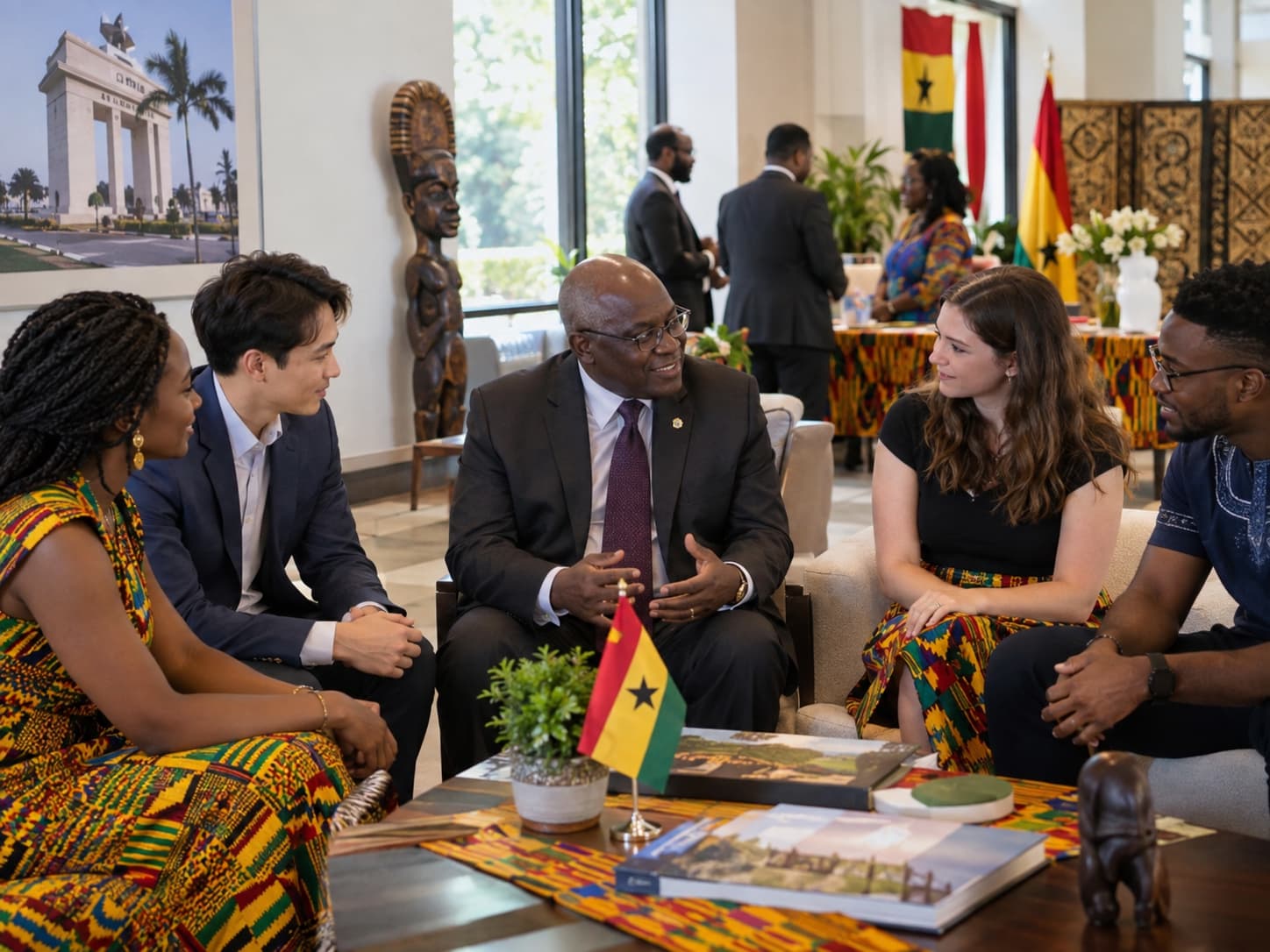
Embassies are usually associated with diplomacy, visas and assistance to citizens abroad, but their work can extend much further. For Ghanaian diplomatic missions, cooperation with universities offers a practical way to strengthen long-term relationships with other countries. Universities bring together students, researchers, lecturers and future professionals, while embassies can connect these communities with institutions, cultural organizations and opportunities in Ghana. When this cooperation works well, it supports academic exchange while also introducing Ghanaian culture to people who may have little direct contact with the country.
Educational diplomacy is particularly valuable because its effects can continue long after a single event has ended. A student who spends a semester studying in Ghana may later work in business, research, government or international development. A Ghanaian researcher who collaborates with colleagues abroad can build professional networks that lead to additional projects. In this sense, cooperation between embassies and universities is not simply about organizing lectures or ceremonies. It can create relationships that continue for years.
Connecting Universities Across Borders
One of the most useful roles of an embassy is to help institutions find the right partners. A university interested in West African studies, public health, agriculture, engineering or cultural research may not know which Ghanaian institution is most suitable for cooperation. Diplomatic missions can help establish initial contact and provide context about the country’s academic environment.
The same process can work in the opposite direction. Ghanaian universities looking for international partners may use diplomatic networks to identify institutions with compatible research interests. The embassy does not need to manage the academic project itself. Its value often lies in making introductions, helping both sides understand local conditions and creating a trusted starting point for communication.
This can lead to agreements covering student mobility, joint research, visiting lecturers or shared academic programs. Some partnerships begin with a relatively small activity, such as an online seminar, before developing into a more formal relationship. Starting gradually allows both institutions to understand each other’s expectations and determine which areas of cooperation are realistic.
Student and Researcher Exchanges
Student exchange is one of the most visible forms of academic cooperation. Ghanaian students can gain access to different teaching methods, laboratories and professional networks abroad, while international students studying in Ghana can experience a different academic and social environment.
Embassies can support this process by providing information about educational opportunities, documentation requirements and local institutions. They may also participate in university fairs, orientation events or meetings with international offices. For students already living abroad, an embassy can become a useful point of contact when they need consular information or assistance understanding official procedures.
Researcher mobility can be equally important. Short visits by lecturers and scientists may produce joint publications, conferences or new research projects. Fields such as agriculture, climate studies, public health, renewable energy and urban development can benefit from cooperation because many of the problems being studied cross national borders.
The most productive exchanges are usually based on clear academic goals rather than travel alone. A student or researcher should know what knowledge, experience or collaboration the exchange is expected to produce. Embassies can help by bringing together the institutions and organizations capable of turning a general idea into a structured project.
Ghanaian Culture on University Campuses
Academic cooperation does not have to remain inside lecture halls. Universities are also important cultural spaces, making them natural partners for exhibitions, film screenings, music performances, literary events and public discussions about Ghana.
An embassy might work with a university to organize a Ghanaian cultural week featuring contemporary art, traditional textiles, food, music or literature. Such events can introduce the country in a more complex way than a simple tourism presentation. Students can learn about the history of kente, contemporary Ghanaian design, modern music, local languages or the country’s literary traditions.
These activities are especially valuable when Ghanaian students and members of the diaspora participate directly. Instead of presenting culture as something static, universities can create opportunities for conversation between people with different experiences of Ghana. A student who grew up in Accra may have a different perspective from someone raised in a Ghanaian family abroad, and both can contribute to a richer discussion.
Cultural events can also become an entry point for academic interest. A student who first attends a Ghanaian film screening may later take a course on African politics, development or history. A music workshop may lead to research on cultural heritage. In this way, cultural diplomacy and academic exchange can reinforce each other.
Building Opportunities Beyond the Classroom
University partnerships can also connect students with business, public institutions and civil society. Embassies often maintain relationships with chambers of commerce, cultural organizations, NGOs and professional associations. Bringing these networks into academic cooperation can make exchanges more practical.
For example, students participating in a Ghana-related program may benefit from internships, field visits or meetings with professionals working in areas connected to their studies. Researchers may find local organizations able to provide expertise or data. Entrepreneurs and technology students can meet people working in Ghana’s growing business sectors.
Such cooperation is particularly useful when students are approaching graduation. International education becomes more valuable when participants understand how their academic experience can translate into professional opportunities. An embassy can help universities connect education with the wider economic and social relationship between Ghana and the host country.
Supporting Ghanaian Students Abroad
Cooperation with universities also gives embassies a way to remain connected with Ghanaian students living overseas. International students often face practical challenges beyond their coursework, from adapting to a new culture to dealing with documents or understanding local institutions.
Embassies are not replacements for university student services, but cooperation between the two can make support more effective. Regular contact with international offices can help diplomatic missions understand the concerns of Ghanaian students, while universities can direct students to the embassy when a consular issue requires official assistance.
Student associations can play an important role here. Ghanaian student groups often organize cultural events, welcome new arrivals and create networks among students from different disciplines. Embassy participation can strengthen these activities without taking them over. The most successful relationship is usually one in which students retain their own initiative while receiving institutional support when necessary.
Long-Term Value of Academic Diplomacy
Academic and cultural exchanges rarely produce immediate diplomatic results, and that is precisely why they matter. Their value develops gradually. Students form friendships, researchers build professional relationships and universities create institutional connections that can survive changes in governments or political priorities.
For Ghana, these partnerships can increase international awareness of its universities, culture and research capabilities. For partner institutions abroad, they provide access to new perspectives, academic environments and research opportunities. The exchange is strongest when it works in both directions rather than presenting one country simply as the teacher and the other as the recipient.
Embassies are well positioned to support this process because they operate between governments and societies. By connecting Ghanaian universities with institutions abroad, supporting students and researchers, and bringing Ghanaian culture onto university campuses, diplomatic missions can turn education into a lasting bridge between countries.
The most valuable outcome is not a single conference or exchange visit. It is the network that remains afterward: students who stay connected, researchers who continue working together and institutions that know whom to contact when the next opportunity appears. In that sense, cooperation between Ghanaian embassies and universities is one of the quieter but potentially most durable forms of international diplomacy.